Agenda

Microelectronics colloquium

Neuromorphic everything

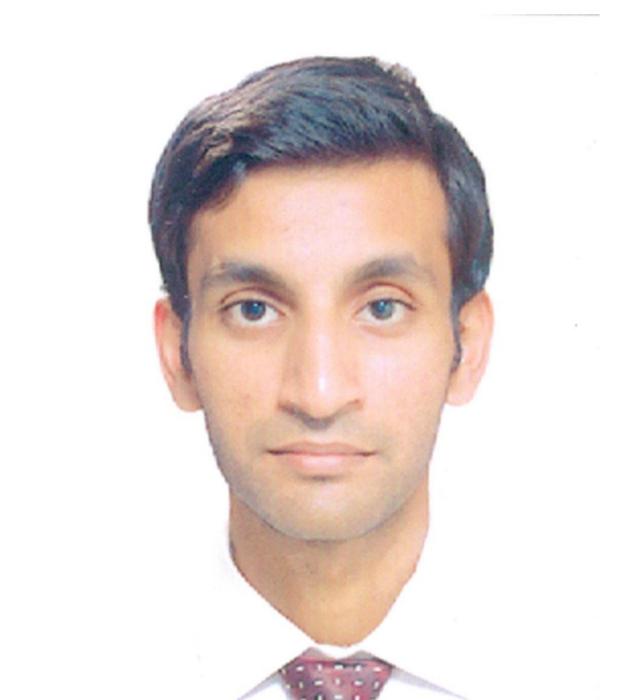
Sumeet Kumar, CEO

With billions of sensors making their way into smart devices each year, the need for energy-efficient AI has never been more pressing. The inherent sparsity, event-driven nature, and temporal processing abilities of spiking neural networks make neuromorphic computing a promising solution to the challenges of AI at the edge. This talk will dive into the architecture of the world's first neuromorphic microcontroller - the Spiking Neural Processor Pulsar - and how it addresses the challenges of resource-constrained use-cases close to the sensor. The talk will explore some of the real-world applications where Pulsar is being deployed, and highlight the impact of neuromorphic technologies on battery-life, performance and usability of modern smart devices.

About Innatera:

Innatera develops ultra-low power intelligence for sensors. A spin-off from the Delft University of Technology, Innatera develops a line of neuromorphic processors that mimic the brain's mechanisms for sensory perception. With a fundamentally new computing architecture, Innatera's chips enable sensor data to be processed 100x faster, and with 500x lesser energy than conventional technologies.

Innatera is backed by leading European investors, and has raised €55m over three rounds of funding. With a team of 115 people across 16 countries, the company aims to bring intelligence to a billion sensors by 2030.

Bio

Dr. Sumeet Kumar is CEO of Innatera, the pioneering Dutch neuromorphic processor company. Dr. Kumar holds an MSc and PhD in Microelectronics from the Delft University of Technology, The Netherlands in the design of energy-efficient microprocessors. He was previously with Indrion Technologies where he developed processors for wireless sensor network nodes, and Intel, where he worked with the Imaging and Camera Technologies Group developing domain-specific tools for the development of complex media processor architectures. At Delft, Dr. Kumar is credited with creating two highly-successful European R&D programmes (EUR 50million each) developing energy-efficient compute hardware for highly automated vehicles, together with leading automotive and semiconductor companies. Technologies developed by these programs are now in commercial vehicles in production.

He co-founded Innatera in 2018 together with a team of experienced semiconductor experts and entrepreneurs.


Additional information ...


Microelectronics Colloquium

Machine Learning-Based Calibration of Analog-to-Digital Converters

Maarten Molendijk
NXP Semiconductors, Eindhoven

ADC calibration algorithms are paramount in modern IC design to relax or overcome analog limitations. While digital-assisted analog and digital post-correc­tion techniques are widespread in literature, a relatively new approach – machine learning (ML)-based calibration – has the potential to calibrate highly complex errors but is still largely unexplored. In this forum, an overview of ML-based calibration methods and their challenges is presented followed by an outlook on future directions.


Speaker Bio:

Maarten Molendijk received the M.Sc. degree in electrical engineering (cum laude) from Eindhoven University of Technology, Eindhoven, The Netherlands, in 2022. In the same year, he joined NXP Semiconductors, where he works in the analog mixed-signal department on novel machine learning-based calibration methods for analog-to-digital converters. In 2024, he began pursuing a Ph.D. degree at Eindhoven University of Technology on this topic. His research interests include analog circuit modeling and calibration, interpretable machine learning, and signal processing.